
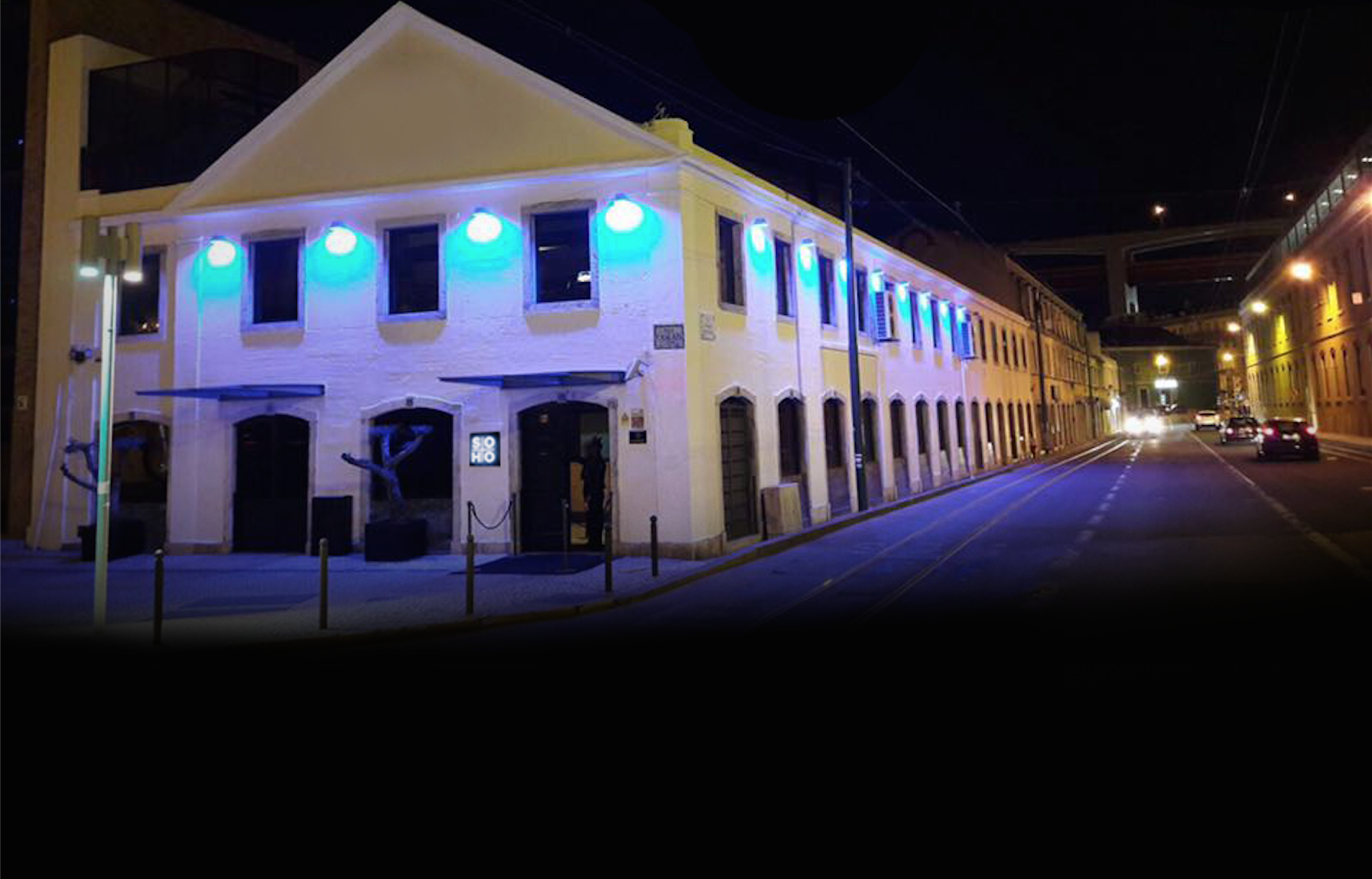
40 Years of History
1981
BANANAS
Upon arriving in Lisbon in 1980, after having managed clubs in Rio de Janeiro and São Paulo, Manecas Mocelek wanted to create a venue like the ones he had seen abroad: a nightclub, a private club, and a restaurant. He teamed up with Jorge Caiado, Hermano Margarido, Miguel Polignac, Luís Nogueira, and António Ferreira de Almeida.
Opened on June 1, 1981, in Alcântara, Banana Power—known simply as Bananas—proved to be a breath of fresh air for a society eager to unwind after the tensions following the April 25 revolution. A true phenomenon, from its very first night it drew crowds of all ages who didn’t mind waiting in a line that stretched 300 meters.
One night, the then-prime minister, Francisco Pinto Balsemão, arrived with his girlfriend, Tita Presas, for another night of relaxation and plenty of dancing. Upon running into Manecas Mocelek, Balsemão asked jokingly, “So, Manecas, how’s the night going?” The other man replied ironically, “The night’s going well—I just don’t know how the day’s going to go. You take care of the day, and I’ll take care of the night.” Everyone burst out laughing, and the episode went down in Bananas history.
1989
COFFEE COFFEE
In 1989, Herman José reopened the venue as Café Café.
During the 1990s, Café Café was one of the most popular nightspots in Lisbon. In addition to being a regular hangout for various public figures, it was also Lisbon’s premier venue for celebrity parties, events, album releases, and more…
In a few days, it was possible to see live performances by Herman José himself.
2008
TWINS
In 2008, Batata Cerqueira Gomes, Manuel Guedes, and Tiago Pinto Leite—owners of the iconic Twins, which had been open since 1974 as a high-end venue in the city of Porto—purchased the space and opened Twins Lisboa.
With its understated luxury ambiance, Twins has instantly become the new hotspot for Lisbon’s elite nightlife scene.
2018
SOHO
Combining the concepts of a restaurant and a club in a single space, SOHO draws inspiration from the cosmopolitan and informal atmosphere of clubs in London and New York, proudly showcasing Portuguese culture through the bookshelves scattered throughout the space, the portraits of great Portuguese writers, and even the statue of Fernando Pessoa that greets visitors at the entrance.